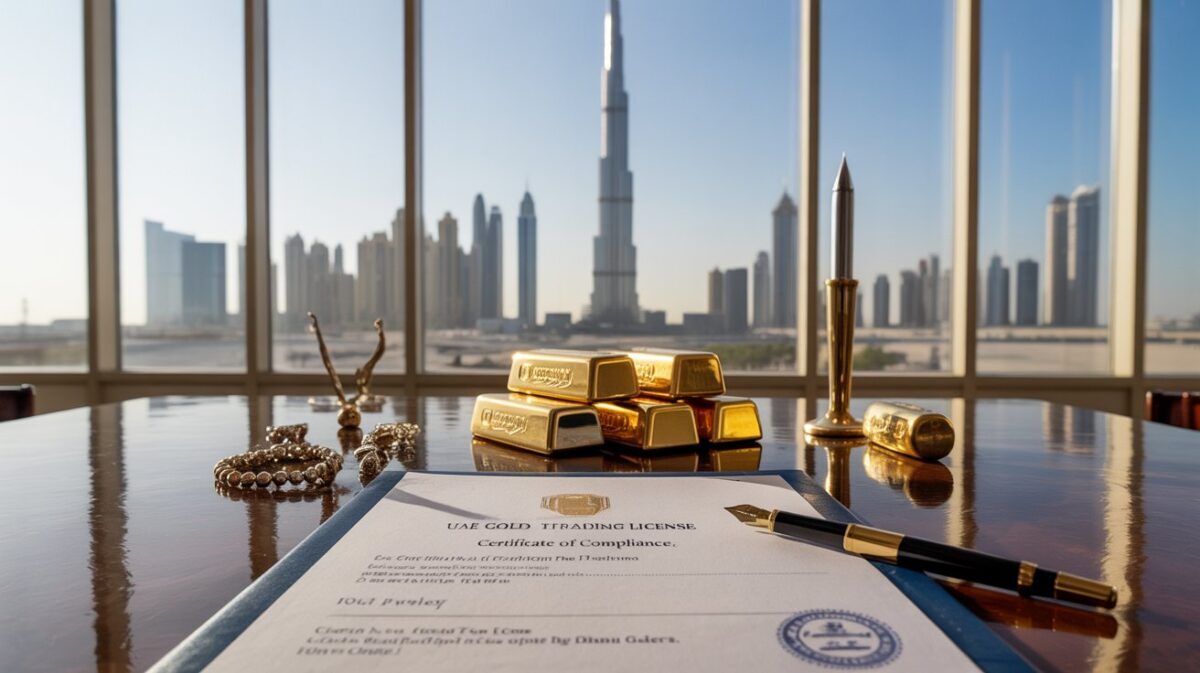
The United Arab Emirates stands as a premier global hub for gold trading, attracting investors and entrepreneurs from around the world. Dubai, in particular, earns its nickname as the “City of Gold” through landmarks like the Gold Souk and the Dubai Multi Commodities Centre (DMCC), which facilitate billions in annual transactions. The UAE’s gold market benefits from robust infrastructure, secure vaults, and access to international exchanges, making it a vital link between Eastern and Western markets.
Demand for a gold trading license in the UAE continues to rise due to economic stability and growing investor interest in precious metals as a hedge against inflation. Foreign nationals and local entrepreneurs alike seek opportunities in this sector, driven by the UAE’s business-friendly policies. This guide provides a detailed overview of how to obtain a gold trading license in the United Arab Emirates, covering requirements, processes, and key considerations to help you navigate the regulatory landscape effectively.
What Is a Gold Trading License in the UAE?
A gold trading license in the UAE authorizes businesses to engage in the buying, selling, importing, exporting, and storage of gold and related products. Issued by authorities such as the Department of Economy and Tourism (DET, formerly DED) for mainland operations or free zone bodies like DMCC, this license ensures compliance with national standards for precious metals trading.
Permitted activities typically include wholesale and retail gold trading, refining, and dealings in gold bullion, coins, or jewelry. However, restrictions may apply based on the license type— for instance, some limit operations to specific zones.
The distinction between a gold trading license and a broader precious metals trading license lies in scope. A gold-specific license focuses primarily on gold, while precious metals trading encompasses silver, platinum, diamonds, and other gems. Businesses dealing in multiple commodities may need a combined or general trading license to avoid penalties for unlicensed activities.
What Activities Are Covered Under a UAE Gold Trading License?
- Buying and selling physical gold in forms like ingots, bars, or biscuits.
- Importing and exporting gold internationally.
- Storage and logistics in approved facilities.
- Limited manufacturing or refining, if specified.
Why Start a Gold Trading Business in the UAE?
The UAE offers compelling advantages for gold trading ventures. Tax benefits include 0% corporate and personal income tax in most free zones, with a low 5% Value Added Tax (VAT) that is often exempt for wholesale pure gold transactions (99% purity or higher). This structure minimizes financial burdens compared to other global markets.
Strategically located at the crossroads of Europe, Asia, and Africa, the UAE provides seamless access to major shipping routes and airports. Ports like Jebel Ali enhance logistics for gold imports and exports.
Regulatory transparency is another key draw. The UAE’s frameworks, overseen by bodies like the Securities and Commodities Authority (SCA) and DMCC, promote fair practices and investor protection. Combined with political stability and world-class infrastructure, these factors make the UAE an ideal base for scaling gold trading operations.
Key Benefits at a Glance
| Advantage | Description |
|---|---|
| Tax Incentives | 0% tax on profits in free zones; VAT exemptions for qualifying gold trades. |
| Location | Proximity to global markets; efficient customs procedures. |
| Regulations | Clear guidelines ensuring security and compliance. |
Types of Gold Trading Licenses in the UAE
Gold trading licenses in the UAE fall into two main categories: mainland and free zone. Each suits different business models based on market access, ownership, and costs.
A mainland gold trading license, issued by the DET, allows unrestricted trading across the UAE, including local markets. It requires no local sponsor for full foreign ownership in most cases, but involves additional approvals like those from the Security Industry Regulatory Agency (SIRA) for security compliance.
Free zone licenses, such as those from DMCC, IFZA, or Jebel Ali Free Zone Authority (JAFZA), offer 100% foreign ownership, tax exemptions, and simplified setups. DMCC specializes in commodities, providing access to vaults and exchanges like the Dubai Gold & Commodities Exchange (DGCX). However, free zone businesses may need distributors for mainland trading.
Key differences include operational flexibility— mainland for broad UAE access, free zones for international focus and cost efficiency. Mainland suits retail-oriented businesses, while free zones like DMCC are ideal for wholesale or export-driven operations.
Mainland vs. Free Zone: A Comparison
| Feature | Mainland License | Free Zone License |
|---|---|---|
| Ownership | 100% foreign possible | 100% foreign |
| Market Access | Full UAE, no restrictions | Limited to zone/international; distributors for mainland |
| Setup Cost | Higher (AED 20,000–50,000) | Lower (AED 15,000–30,000) |
| Suitability | Local retail/wholesale | Export/import focus |
Gold Trading License Requirements in the UAE
To qualify for a UAE gold trading license, applicants must meet eligibility criteria. Shareholders can be foreign nationals or UAE residents, with no minimum capital requirement in most cases, though a financial guarantee may be needed for high-value trades.
Physical infrastructure is essential: an office or warehouse must comply with safety standards, including CCTV and secure storage, often verified by SIRA inspections.
Compliance with Anti-Money Laundering (AML) and Know Your Customer (KYC) regulations is mandatory. Businesses classified as Designated Non-Financial Businesses and Professions (DNFBPs) must register with the Financial Intelligence Unit via goAML, implement customer due diligence, and report suspicious transactions.
Who Can Apply for a UAE Gold Trading License?
- Individuals or corporations with clean legal records.
- Foreign investors without residency restrictions in free zones.
- Businesses demonstrating financial stability.
Step-by-Step Process to Obtain a Gold Trading License in UAE
Securing a gold trading license involves a structured process, typically taking 2–4 weeks.
- Trade Name Reservation: Submit five proposed names to the DET or free zone authority for approval, ensuring they comply with UAE naming rules (no offensive terms, unique).
- Initial Approval: Apply for preliminary approval, outlining business activities and structure. This step confirms eligibility without committing to full setup.
- Documentation Submission: Provide required papers, including passports, business plans, and NOCs. For free zones, this may include a lease agreement draft.
- Office Lease & Inspections: Secure an approved office or warehouse. Authorities conduct inspections for compliance with fire safety, security, and zoning.
- Final License Issuance: Pay fees and receive the license upon approval. Register for VAT if turnover exceeds AED 375,000 annually.
How Long Does the Gold Trading License Process Take in the UAE?
Processing times vary: 1–2 weeks for free zones like DMCC, up to 4 weeks for mainland due to additional approvals.
Documents Required for a Gold Trading License
Documentation differs for individual and corporate applicants, as well as UAE residents versus foreign investors.
For individuals: Passport copies, Emirates ID (if resident), visa copies, proof of address, and a no-objection certificate (NOC) from sponsors if employed.
Corporate applicants need: Memorandum of Association (MoA), board resolutions, shareholder passports, and audited financials.
Foreign investors submit similar documents, plus bank reference letters and business plans. All must be notarized and translated into Arabic if necessary.
Essential Documents Checklist
- Passport copies of shareholders/managers.
- Business plan detailing operations.
- Proof of trade name reservation.
- Lease agreement for premises.
- Bank reference and financial guarantees.
Cost of a Gold Trading License in the UAE
Costs for a gold trading license range from AED 15,000 to AED 50,000, depending on jurisdiction and scale. License fees alone are AED 10,000–20,000 annually, with additional charges for visas (AED 3,000–7,000 each), trade name registration (AED 500–1,000), and SIRA approval (AED 5,000–10,000).
Free zones like IFZA offer lower entry points (AED 15,000–30,000), while mainland setups can reach AED 20,000–50,000 due to higher office rents. Operational costs include warehousing (AED 50,000+ yearly) and insurance.
Free Zone vs. Mainland Cost Breakdown
| Expense | Free Zone (e.g., DMCC) | Mainland |
|---|---|---|
| License Fee | AED 15,000–30,000 | AED 20,000–40,000 |
| Visa Costs | AED 3,000–5,000 per visa | AED 4,000–7,000 per visa |
| Total Setup | AED 30,000–60,000 | AED 40,000–100,000 |
Gold Trading License in Dubai vs Other Emirates
Dubai dominates gold trading with advantages like DMCC’s specialized ecosystem, access to DGCX, and the Gold Souk’s retail network. Costs are higher, but benefits include global visibility and efficient customs.
Other emirates like Abu Dhabi or Sharjah may suit cost-conscious setups. Sharjah offers cheaper licenses (AED 10,000–20,000) with proximity to Dubai ports, ideal for logistics-focused businesses. Abu Dhabi provides stability for institutional trading but fewer gold-specific incentives.
When to Choose Other Emirates for a Gold Business License in the UAE?
Opt for Sharjah if budgets are tight or for access to industrial zones. Abu Dhabi suits ventures tied to oil-related investments.
Compliance, Auditing, and Ongoing Obligations
Post-licensing, businesses must adhere to AML/KYC protocols, including customer verification and transaction monitoring for deals over AED 55,000. VAT registration is required for eligible turnovers, with exemptions for pure gold wholesale.
Annual audits are mandatory in zones like IFZA starting 2025, ensuring financial transparency. License renewals occur yearly, involving fee payments and compliance checks. Failure to report suspicious activities can result in fines up to AED 1 million or license suspension.
What Are the Key Compliance Requirements for Gold Traders in the UAE?
- Implement AML systems with due diligence.
- File annual audits and renew licenses on time.
- Maintain records for at least five years.
Common Challenges and Mistakes to Avoid
Entrepreneurs often face hurdles like regulatory non-compliance, leading to delays or fines. Underestimating costs, such as hidden fees for inspections, can strain budgets.
Choosing the wrong jurisdiction – e.g., a free zone for mainland-focused retail – restricts operations. Incomplete documentation or ignoring AML setup are frequent errors.
Top Mistakes When Applying for a UAE Gold Trading License
- Selecting incorrect business activities on the application.
- Skipping SIRA or AML registrations.
- Rushing without a detailed business plan.
How KGRN Can Help
Navigating the complexities of obtaining a gold trading license requires in-depth knowledge of UAE regulations. KGRN Chartered Accountants offers expert guidance on licensing, compliance, and business setup. With years of experience, the firm provides end-to-end support, from document preparation to audit services, ensuring your venture aligns with legal standards. This advisory approach helps mitigate risks and streamlines the process for efficient market entry.
Conclusion
Starting a gold trading business in the United Arab Emirates is a strategic move, but success depends on choosing the right licensing jurisdiction and meeting strict regulatory requirements. From understanding gold trading license eligibility and documentation to ensuring AML, VAT, and audit compliance, each step requires careful planning and expert execution.
For most gold traders, a Free Zone Business Setup in UAE offers the ideal combination of regulatory clarity, international trading flexibility, and streamlined approvals, particularly in specialized zones such as DMCC. With professional support from KGRN Chartered Accountants, businesses can confidently navigate the gold trading license process while ensuring compliance, operational efficiency, and sustained growth.
FAQs
What is the difference between a Dubai gold trading license and a UAE gold import export license?
A Dubai gold trading license covers buying/selling within Dubai, while a UAE gold import export license focuses on cross-border activities, often requiring customs approvals.
How much does a gold trading license cost in the UAE?
Costs range from AED 15,000 to AED 50,000, varying by mainland or free zone setup.
What are the UAE gold trading license documents needed for foreign investors?
Passports, business plans, bank references, and NOCs are standard.
Is a gold trade license in a UAE free zone suitable for retail?
Free zones are better for wholesale; mainland for retail due to broader access.
What ongoing obligations follow obtaining a gold trading license in the UAE?
Annual renewals, audits, AML reporting, and VAT compliance are required.