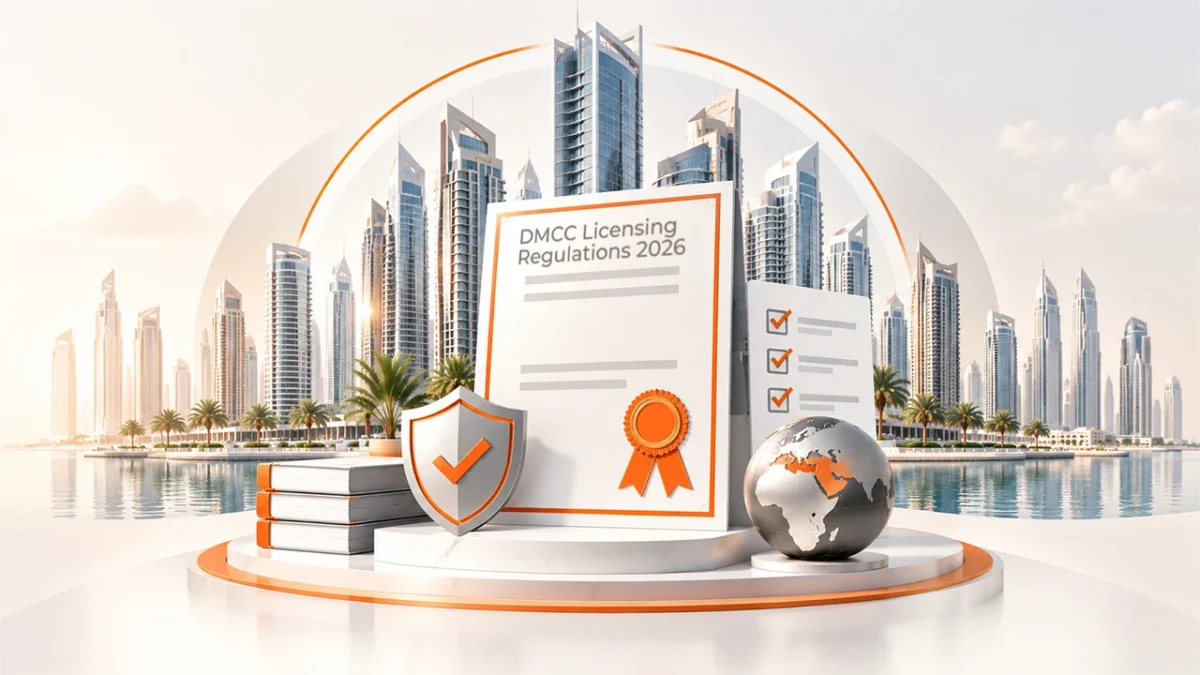
In the UAE’s dynamic free zone ecosystem, robust licensing and compliance form the foundation for sustainable business operations. The Dubai Multi Commodities Centre (DMCC), one of Dubai’s premier free zones, continues to strengthen its regulatory framework to align with international standards while supporting business growth.
Increasing regulatory scrutiny in 2026, driven by UAE Corporate Tax alignment, AML enhancements, and digital transparency tools, makes compliance more critical than ever. Businesses ignoring these DMCC licensing regulations 2026 risk fines, license suspension, banking disruptions, and loss of Qualifying Free Zone Person (QFZP) tax benefits.
This guide outlines the key updates, requirements, obligations, and practical steps to maintain full compliance in DMCC for 2026 and beyond.
What is DMCC and Why Licensing Compliance Matters
The Dubai Multi Commodities Centre (DMCC) is a leading free zone established to facilitate global trade in commodities, with a focus on metals, energy, and related services. It now supports over 1,000 approved business activities across trading, services, industrial, and commercial categories.
A valid DMCC license is mandatory for legal operations within the Jumeirah Lakes Towers (JLT) area. It provides benefits such as 100% foreign ownership, tax advantages on qualifying income, and streamlined visa processing.
Non-compliance carries significant business impact:
- Operational disruptions and inability to renew visas or open/maintain bank accounts.
- Financial penalties and potential license suspension or revocation.
- Reputational damage and loss of eligibility for 0% Corporate Tax on qualifying free zone income.
- Challenges in KYC/AML reviews by banks and partners.
Strong licensing compliance protects your operations, ensures access to DMCC’s ecosystem, and supports long-term growth in the UAE.
Key DMCC Licensing Updates in 2026
DMCC continues to modernize its regulations through the DMCC Connect 2.0 digital platform, which uses AI-assisted verification for faster license renewals, UBO filings, and compliance tasks.
Notable 2026 updates include:
- Mandatory FZCO Naming Rule: New companies must include “FZCO” (Free Zone Company) in their legal name. Existing DMCC limited liability companies have until 30 June 2026 to amend their name. Missing this deadline risks renewal complications, banking issues, and administrative penalties.
- Sector-Specific Licensing: Enhanced rules for digital assets, cryptocurrency, precious metals, and sustainable commodities, often with minimum capital requirements and stricter due diligence. Crypto-related trading may require additional VARA approval.
- UBO and AML Enhancements: Stricter verification, with changes in ownership/control (25%+) reportable within 15 days via the portal.
- Digital Transformation: Expanded use of DMCC Connect 2.0 for submissions.
- Operational Flexibility: Easier mainland operations with a separate DET license, provided financial records remain segregated.
- Audit and Tax Alignment: Mandatory audited financial statements for most companies, directly linked to Corporate Tax compliance and QFZP status.
2025 vs 2026 Comparison Table
| Aspect | 2025 Position | 2026 Updates | Business Implication |
|---|---|---|---|
| Company Naming | Optional/legacy “DMCC” suffix | Mandatory “FZCO” suffix by 30 June 2026 | Name amendment required for legacy firms |
| Digital Platform | Basic online portal | DMCC Connect 2.0 with AI verification | Faster processing, better transparency |
| Crypto/Digital Assets | Limited approvals | Specific licenses + potential VARA requirements | Stricter due diligence for high-risk sectors |
| UBO Reporting | Annual or event-based | 15-day reporting for 25%+ changes | Higher risk of fines for delays |
| Audit Requirements | Mandatory for most | Tighter enforcement + CT/QFZP linkage | Essential for tax benefits |
DMCC License Requirements in 2026
DMCC offers several license types based on your activities:
- Trading License: For importing, exporting, and distributing goods.
- Service License: For consultancy, professional, and advisory services.
- Industrial License: For manufacturing and production.
- Commercial License: For SPVs, holding companies, etc.
- Freelance Permit: For individual professionals.
Core Documentation Requirements:
- Passport copies and proof of address for shareholders/directors.
- Business plan or activity description (especially for regulated sectors).
- Bank reference letters.
- Proof of minimum share capital (typically AED 50,000, deposited in a UAE corporate account).
- UBO details for individuals with 25%+ ownership or control.
Physical Presence: Companies must maintain a registered address in DMCC (physical office or flexi-desk in JLT) for visa eligibility.
Shareholder Structure: 100% foreign ownership allowed; minimum one shareholder (individual or corporate). Directors and company secretary must be appointed.
Compliance Obligations: Accurate activity selection is critical—mismatches can trigger audits or amendments.
Setup typically takes 2–4 weeks, with costs ranging from AED 35,000–70,000+ depending on license type, office space, and visas.
DMCC Compliance Requirements & Ongoing Obligations
Compliance extends well beyond initial setup:
- Annual License Renewal: Submit before expiry via DMCC portal. Requires valid tenancy, updated documents, and fees. Late renewal triggers sanctions.
- Audit Requirements: Most companies must prepare and submit audited financial statements annually using a DMCC-approved auditor. Linked to Corporate Tax filings and QFZP eligibility.
- UBO Filing: Maintain and update the Ultimate Beneficial Owner register. Report significant changes within 15 days.
- ESR & Corporate Tax Linkage: Comply with Economic Substance Regulations (if applicable) and ensure substance requirements for 0% tax on qualifying income. File CT returns via EmaraTax.
- Record-Keeping: Retain documents for at least 5–7 years; implement robust AML/CFT policies with customer due diligence.
- DMCC Connect 2.0: Use the platform for all filings and verifications.
Ongoing obligations ensure seamless operations and protect tax advantages.
Common Compliance Mistakes Businesses Make
Many businesses encounter issues due to:
- Missing license renewal or name amendment deadlines (especially the 30 June 2026 FZCO deadline).
- Selecting incorrect or overly broad business activities, leading to amendment requests.
- Inadequate documentation or delayed UBO updates.
- Underestimating audit and Corporate Tax linkages, risking loss of QFZP status.
- Ignoring regulatory communications or failing to monitor DMCC updates.
- Poor internal record-keeping for AML or transfer pricing.
These errors often result in avoidable fines and operational halts.
Penalties for Non-Compliance in DMCC
DMCC enforces strict sanctions under its Company Regulations:
- Financial Fines: Administrative penalties for late filings, missing audits, or UBO delays (can exceed AED 100,000 in severe cases).
- License Suspension: Automatic sanctions on the company account for expired licenses; potential full suspension or revocation.
- Business Restrictions: Inability to process visas, amendments, or new activities.
- Banking and KYC Risks: Banks may freeze accounts or impose enhanced scrutiny.
- Additional Consequences: Company strike-off in extreme cases; reputational harm affecting partnerships.
Proactive compliance is far more cost-effective than remediation.
Practical Compliance Checklist for DMCC Businesses (2026)
Use this checklist to stay audit-ready:
- Confirm or amend company name to include “FZCO” (by 30 June 2026 if applicable).
- Appoint and engage a DMCC-approved auditor for annual financial statements.
- Update and verify UBO register; report changes within 15 days.
- Renew trade license before expiry with complete documentation.
- Maintain physical office/flexi-desk in JLT and valid tenancy contract.
- Ensure alignment with Corporate Tax and ESR obligations (substance, filings).
- Implement AML policies with ongoing customer due diligence and sanctions screening.
- Monitor DMCC Connect 2.0 notifications and regulatory updates.
- Conduct internal compliance reviews at least quarterly.
- Retain all records for the required period.
Review this checklist regularly and before key deadlines.
Expert Insights: How to Stay Compliant in 2026
Adopt a proactive compliance strategy rather than a reactive one. Schedule internal audits, assign clear ownership of regulatory tasks, and integrate compliance into your operational calendar.
Leverage DMCC Connect 2.0 for efficiency while maintaining robust internal controls. Stay informed through official DMCC resources and industry updates.
Engaging experienced consultants or approved service providers can help navigate complex areas such as name amendments, sector-specific licensing, audit preparation, and Corporate Tax optimization. Professional support minimizes risks and frees management to focus on growth.
Conclusion
Navigating DMCC licensing regulations 2026 demands attention to detail, timely action, and a clear understanding of both free zone and federal requirements. From the FZCO naming mandate to enhanced digital compliance tools and tighter audit standards, these updates reinforce DMCC’s position as a transparent, business-friendly jurisdiction.
Businesses that treat compliance as a strategic priority gain smoother operations, stronger banking relationships, and full access to UAE tax benefits.
Stay compliant and audit-ready with expert guidance. At KGRN, our team specializes in DMCC company setup, license renewals, audits, and ongoing compliance support tailored to free zone businesses.
FAQ
What are the main DMCC license types available in 2026?
DMCC offers Trading, Service, Industrial, Commercial, and Freelance licenses, covering over 1,000 approved activities.
What is the FZCO naming requirement deadline in 2026?
Existing companies must update their legal name to include “FZCO” by 30 June 2026 to avoid renewal issues.
Is an audit mandatory for DMCC companies?
Yes, most companies must submit audited financial statements annually using a DMCC-approved auditor, regardless of size.
How do I renew my DMCC license in 2026?
Submit the renewal application via the DMCC portal before expiry, including updated documents, tenancy proof, and fees.
What are the risks of non-compliance with DMCC regulations?
Penalties include fines, license suspension, banking restrictions, and potential loss of Corporate Tax benefits.