
A business may use financial instruments to manage currency, interest rate or commodity price exposure. But do its financial statements clearly explain the relationship between those instruments and the risks being managed?
That question is relevant to UAE finance and treasury teams following the International Accounting Standards Board’s review of hedge accounting requirements.
Highlighted in Integra International’s Audit & Accounting Alert, the review provides an opportunity to examine how existing requirements work in practice. KGRN outlines the development and the questions UAE businesses can bring into their reporting discussions.
What has the IASB announced?
On 28 September 2026, the IASB published a Request for Information covering:
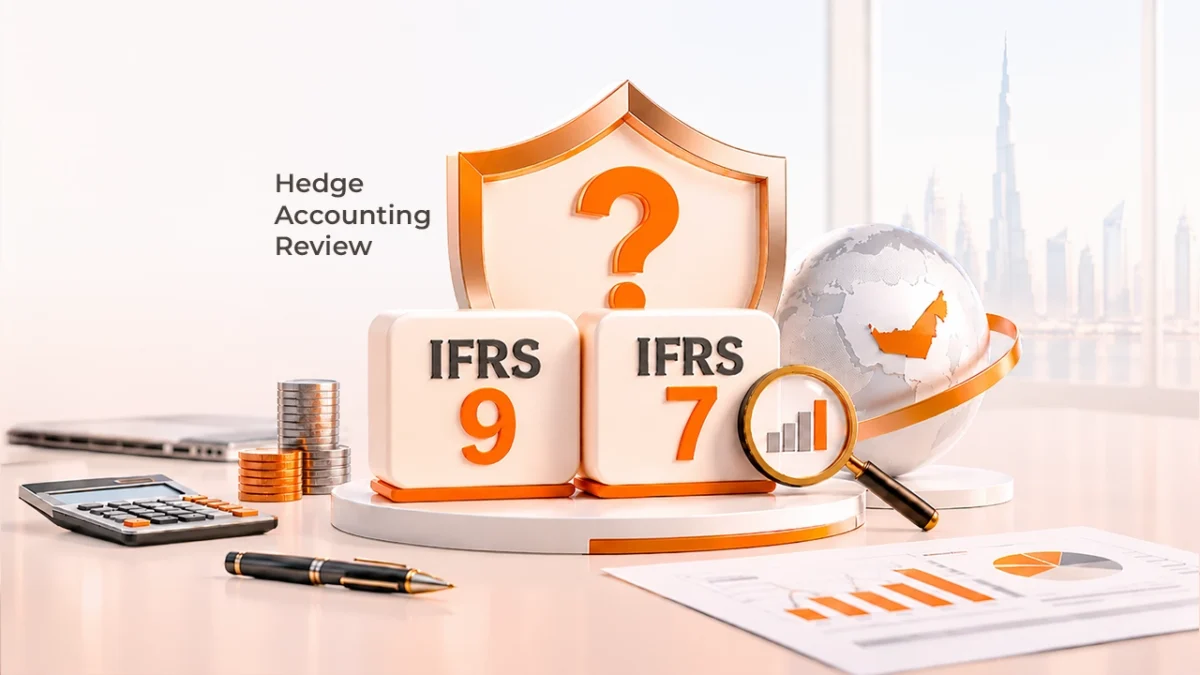
- The hedge accounting requirements in IFRS 9 Financial Instruments.
- The hedge accounting disclosure requirements in IFRS 7 Financial Instruments: Disclosures.
The review considers whether the requirements deliver the intended information to financial statement users and whether implementation costs are broadly consistent with expectations.
Stakeholders can submit feedback until 26 January 2027.
Does this introduce a new requirement for UAE businesses?
No. The announcement is a consultation examining existing requirements. It does not itself introduce a new UAE regulation, change the accounting treatment of an existing hedge or create a new implementation deadline.
The January deadline is for consultation responses. Businesses should continue applying the accounting requirements relevant to their financial statements.
Which UAE businesses should pay attention?
The subject is particularly relevant to UAE entities reporting under IFRS Accounting Standards that use, or are considering using, hedge accounting.
Illustrative situations include:
- An importer managing exposure to purchases denominated in a foreign currency.
- A business managing interest rate exposure on floating-rate borrowings.
- A company managing exposure to changes in commodity prices.
These examples identify potential risk-management situations. They do not establish that a particular arrangement qualifies for hedge accounting.
A commercial hedge does not automatically qualify for hedge accounting
Entering into a hedging contract is only part of the assessment.
IFRS 9 includes qualifying criteria relating to eligible instruments and hedged items, formal designation and documentation at inception, and hedge effectiveness. The accounting assessment must consider the particular relationship and the entity’s risk-management objective.
This distinction matters when treasury decisions and financial reporting are handled by different teams. The commercial purpose of a transaction and the basis for its accounting treatment need to be understood together.
Four questions for your next finance and treasury discussion
The following are practical discussion prompts from KGRN, rather than additional obligations introduced by the consultation.
- Is the purpose of each hedge clearly understood?
Start with the underlying exposure. Identify the risk being managed, the instrument used and the intended outcome. Finance and treasury should be working from a consistent understanding of the transaction.
- Does the documentation support the treatment applied?
Where IFRS 9 hedge accounting is applied, assess whether the designation and documentation requirements were met at inception. A later review should not be treated as a substitute for documentation required when the hedging relationship began.
- Do disclosures explain the risk-management strategy?
IFRS 7 requires relevant information about the entity’s risk-management strategy and how it is applied. Review whether the disclosures explain the business’s arrangements clearly, rather than relying on wording that could describe any company.
- Where are the practical difficulties?
Identify recurring challenges in obtaining information, coordinating teams or explaining the accounting outcome. Record specific examples and their consequences. These can support internal improvements and help a business assess whether it has useful evidence to contribute to the IASB consultation.
What should businesses do next?
For UAE businesses with relevant hedging arrangements, a focused discussion between finance, treasury and their accounting advisers is a sensible starting point.
Bring together the underlying contracts, risk-management objectives, designation documents and relevant financial statement disclosures. Use the discussion to identify questions requiring further assessment and assign responsibility for resolving them.
Participation in the IASB consultation is an opportunity to contribute experience. It is not a requirement to change an accounting policy simply because a review is underway.
Discuss your financial reporting requirements with KGRN
If your business uses hedging instruments, speak to KGRN about the financial reporting questions arising from your arrangements.
KGRN is a member of Integra International. This article draws on a development highlighted in Integra International’s Audit & Accounting Alert and the IFRS Foundation’s primary publications. The UAE business examples and discussion prompts are KGRN’s editorial commentary.
Sources: IASB announcement and consultation project page.